
How Difficult Is the Annapurna Nar Phu Valley Trek? A Complete Difficulty Guide
29th Sep, 2026
Is the Annapurna Nar Phu Valley Trek Hard? The Short Answer
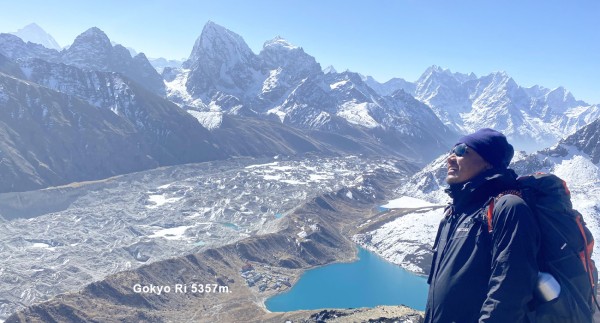
Yes, it is a challenging trek, but it is achievable for a fit, well-prepared and properly acclimatized walker. Mountain Eco Treks grades its 19-day Annapurna Nar Phu Valley Trek as moderate to adventurous. It involves steep terrain, days of 6–7 hours on the trail, several nights above 4,000 m and two high passes: Kang La (around 5,322 m) and Thorong La (5,416 m).
Table of Contents
You do not need mountaineering skills. No ropes, crampons or climbing techniques are required. What you do need is stamina, a steady pace, respect for altitude and a positive attitude. This guide breaks down exactly what makes the trek difficult and how to prepare.
Trek Overview
| Detail | Information |
|---|---|
| Duration | 19 days |
| Grade | Moderate to adventurous |
| Highest point | Thorong La Pass, 5,416 m |
| First high pass | Kang La Pass, around 5,322 m |
| Daily walking | 6–7 hours, about 10–12 km |
| Accommodation | Teahouses and lodges (twin rooms, basic in remote sections) |
| Best seasons | September–December and February–May |
| Route | Kathmandu, Syange, Dharapani, Koto, Nar Phu, Kang La, Manang, Thorong La, Muktinath, Jomsom, Pokhara |
The route leaves the main Annapurna Circuit at Koto and enters the remote Nar and Phu valleys. It then crosses Kang La to Ngawal and Manang and continues over Thorong La to Muktinath and Jomsom. In effect, you are trekking a hidden valley and the Annapurna Circuit's biggest pass in one journey. This combination is the main reason the trek is harder than many better-known routes.
The 6 Factors That Make Nar Phu Challenging
1. High altitude
Altitude is the biggest challenge. Here is how the itinerary climbs:
| Stage | Elevation |
|---|---|
| Koto | 2,640 m |
| Kyang | 4,100 m |
| Phu village | 4,080 m |
| Nar Gaon | 4,206 m |
| Kang La Phedi | 4,530 m |
| Kang La Pass | about 5,322 m |
| Thorong High Camp | 4,600 m |
| Thorong La Pass | 5,416 m |
You spend several nights above 4,000 m, and the air holds well under two-thirds of the oxygen at sea level. The jump from Koto (2,640 m) to Kyang (4,100 m) is one of the biggest gains on the route, so walk slowly, drink plenty of water and tell your guide immediately if you feel unwell.
2. Two high passes
Most treks have one major pass, but this one has two. Both are long, demanding days.
- Kang La day (Day 11): An early start, a steady climb from the base at 4,530 m to the pass, then a long descent to Ngawal at 3,650 m. The itinerary lists about 7 hours, and other operators report that this day can take 9–10 hours depending on pace and conditions. The pass itself is variously measured between about 5,306 m and 5,322 m, depending on the source, so do not be surprised by different numbers.
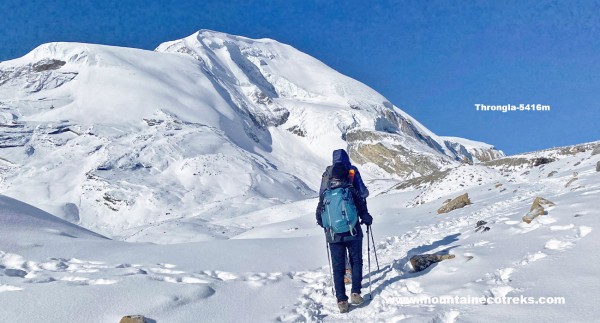
- Thorong La day (Day 15): A steep climb from Thorong High Camp (4,600 m) to 5,416 m, followed by a long descent to Muktinath (3,800 m), about 7 hours.
3. Long, steep walking days
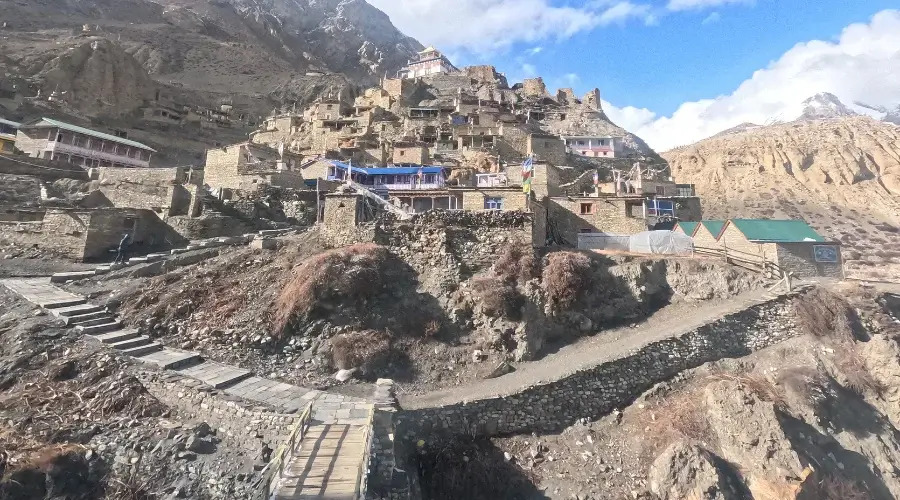
Expect 6–7 hours of walking most days, with plenty of ups and downs on narrow trails and a distance of around 10–12 km a day. The terrain includes forested gorges, suspension bridges, windswept ridges and rocky moraine.
4. Remote conditions and basic facilities
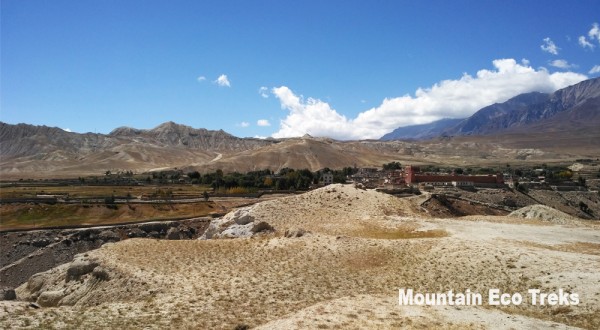
Nar and Phu are remote, traditional Tibetan-influenced villages. Lodges are simple, with basic rooms and shared bathrooms. Luxury lodges do not exist there. Mobile and Wi-Fi coverage is patchy, hot showers and charging cost extra, and near Kang La there may be tented accommodation if lodges are unavailable.
5. Weather and season
Temperatures drop quickly with altitude, and mornings and evenings can be very cold, especially in late autumn, winter and early spring. Snow and wind on the passes can slow progress or force delays. The best windows are September to December and February to May, and you should pack warm layers and a good sleeping bag even in peak season.
6. Permits and mandatory guide
Nar Phu is a restricted area. You need a Restricted Area Permit (RAP), an Annapurna Conservation Area Permit (ACAP) and TIMS registration. The RAP is priced by season: USD 100 for the first week in September to November, and USD 75 in December to August. Solo trekking is not allowed, and a licensed guide arranged through a registered agency is required. Solo trekking is prohibited in this restricted area. Rules and group minimums can change, so confirm the latest requirements with your operator. Mountain Eco Treks arranges the paperwork as part of the package.
Day-by-Day: Where the Trek Gets Tough
| Day | Route | Difficulty |
|---|---|---|
| 1–2 | Kathmandu to Syange (drive) | Easy (about 7 hrs by road) |
| 3 | Syange to Dharapani (1,920 m) | Moderate, about 6 hrs |
| 4 | Dharapani to Koto (2,640 m) | Moderate, about 5 hrs |
| 5 | Koto to Kyang (4,100 m) | Hard: big altitude gain |
| 6 | Kyang to Phu (4,080 m) | Moderate, about 6 hrs |
| 7 | Rest and acclimatization in Phu | Easy |
| 8 | Phu to Nar Phedi (3,545 m) | Moderate |
| 9 | Nar Phedi to Nar Gaon (4,206 m) | Moderate to hard, steep climb |
| 10 | Nar Gaon to Kang La Phedi (4,530 m) | Moderate to hard |
| 11 | Kang La (about 5,322 m) to Ngawal (3,650 m) | Very hard: the toughest day |
| 12 | Ngawal to Manang (3,450 m) | Easy to moderate |
| 13 | Manang to Yak Kharka (4,110 m) | Moderate, about 4 hrs |
| 14 | Yak Kharka to Thorong High Camp (4,600 m) | Moderate to hard |
| 15 | Thorong La (5,416 m) to Muktinath (3,800 m) | Very hard: long day |
| 16 | Muktinath to Jomsom (2,715 m) | Easy, big descent |
| 17–19 | Flight to Pokhara, return to Kathmandu, departure | Easy |
Difficulty Rating at a Glance
This is a general guide based on the itinerary and typical trekker feedback:
| Factor | Rating (out of 5) |
|---|---|
| Altitude | 4.5 |
| Physical effort | 4 |
| Technical difficulty | 1 |
| Remoteness | 4 |
| Comfort and facilities | 3.5 challenge |
| Overall | 4 |
How Nar Phu Compares with Other Annapurna Treks
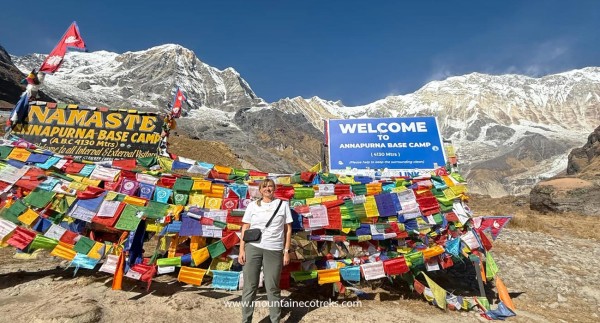
- Annapurna Base Camp Trek: Lower and shorter. It reaches about 4,130 m, with no high pass, so it is easier.
- Annapurna Circuit Trek: Similar in altitude because of Thorong La, but on a busier trail with more facilities.
- Annapurna Circuit with Tilicho Lake: Comparable difficulty at higher altitude on the side trip.
- Nar Phu Valley Trek: Harder than the Circuit alone because of the extra pass, restricted-area remoteness and simpler lodges.
Do You Need Previous Trekking Experience?
Prior high-altitude experience is not mandatory, but hiking experience is strongly recommended. Mountain Eco Treks describes the trek as suited to passionate trekkers with good health, determination and some hiking background. If you have never trekked above 3,000 m, consider starting with a shorter route such as Ghorepani Poon Hill or Annapurna Base Camp first.
How to Prepare: Training and Fitness Tips
- Build endurance for 8–12 weeks. Hike, jog, cycle or use the stair machine 3–4 times a week.
- Train with a backpack. Carry about 5–8 kg on long weekend hikes, including hills.
- Strengthen your legs. Squats, lunges and step-ups help with steep ascents and knee-punishing descents.
- Practise back-to-back days. Walk 5–6 hours two or three days in a row.
- Break in your boots. Blisters are one of the most common problems.
- Get a medical check-up, especially if you have heart, lung or blood-pressure issues.
- Use trekking poles. They are especially useful on Kang La and the long descents.
Tips to Manage Altitude
- Walk slowly ("pole pole") and take regular breaks.
- Drink 3–4 litres of water a day and avoid alcohol.
- Use the rest day at Phu (4,080 m) fully.
- Do not ignore headache, nausea, dizziness or unusual fatigue, and tell your guide right away.
- Be ready to descend if symptoms get worse, and never go higher with worsening symptoms.
- Ask your doctor about altitude medication before you travel.
Best Time to Trek
Autumn (September to December) offers clear skies and stable weather, and the RAP is more expensive in the peak months of September to November. Spring (February to May) brings blooming rhododendrons and milder temperatures on the lower sections, though the high sections can still be cold. Winter (December to March) is significantly colder above 3,000 m and passes can be snowbound, so pack extra warm clothing and be flexible.
What's Included
Mountain Eco Treks' standard plan covers private transport and airport transfers, hotel nights in Kathmandu and Pokhara with breakfast, three meals a day on the trek, safe drinking water, tea and coffee, a government-licensed guide, porters, all permits and paperwork, accident insurance for staff, a first-aid kit, a duffel bag and a down sleeping bag if needed, plus a farewell dinner. Personal travel insurance, extra meals in the cities, bottled drinks, hot showers, Wi-Fi, charging, personal gear and tips are extra. Make sure your insurance covers trekking up to 5,500 m and helicopter evacuation.
Is the Nar Phu Valley Trek Worth the Effort?
For most trekkers, absolutely. You get ancient Tibetan-style villages, remote monasteries, wide glacial valleys, possible wildlife sightings, big Annapurna views from Kang La and the spiritual sight of Muktinath. The difficulty is real, but it is mostly about altitude and endurance, not technical skill, and it can be managed with training and a good pace.
Ready to plan it? Explore the full Annapurna Nar Phu Valley Trek itinerary, or contact Mountain Eco Treks for dates, group options and a personalized quote.
Frequently Asked Questions About the Annapurna Nar Phu Valley Trek
1. How difficult is the Annapurna Nar Phu Valley trek?
The trek is challenging, and Mountain Eco Treks grades it as moderate to adventurous. The difficulty comes mainly from altitude, long walking days and remoteness rather than technical skill. Over 19 days you climb from the Marsyangdi valley into the restricted Nar and Phu valleys, spend several nights above 4,000 m and cross two high passes: Kang La (around 5,322 m) and Thorong La (5,416 m). Most days involve 6–7 hours of walking on steep, uneven trails with many ups and downs.
You do not need ropes, crampons or climbing experience, but you do need good fitness, a steady pace, a positive attitude and some hiking experience. Most trekkers who prepare well and acclimatize properly complete it successfully. The two pass days are the real tests, and they reward you with big Annapurna views.
2. What is the highest point on the trek?
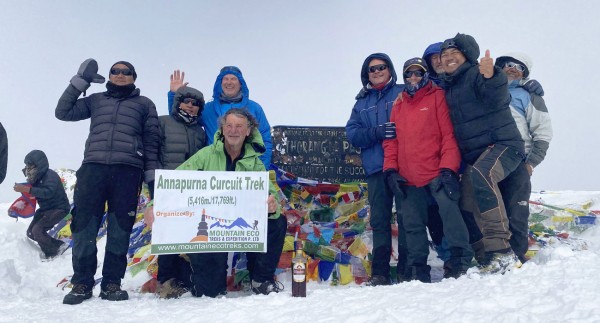
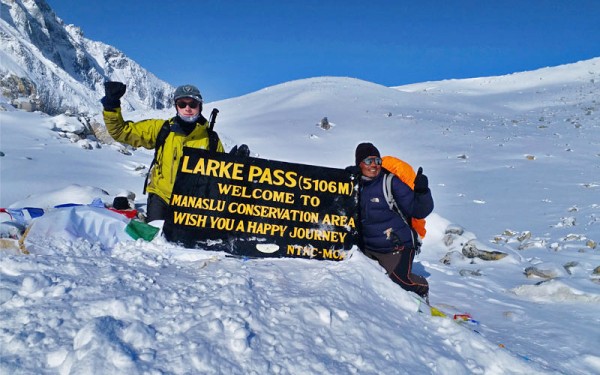
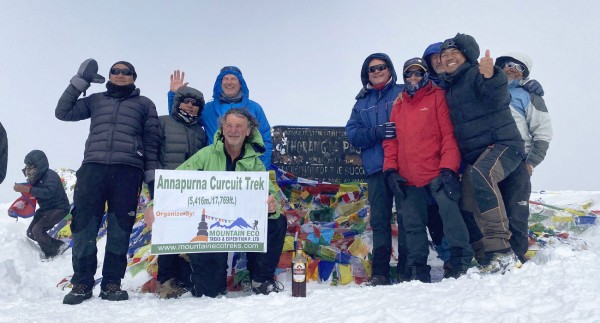
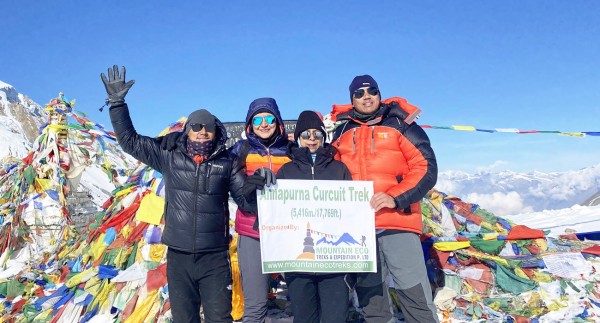
The highest point is Thorong La Pass at 5,416 m, marked with prayer flags and a signboard on Day 15. The first pass, Kang La, is around 5,322 m according to the itinerary. Other sources measure it slightly differently, placing it between roughly 5,306 m and 5,320 m, so you may see different figures in guidebooks and on maps. These differences are common for Himalayan passes and do not change the trek's difficulty. Other key altitudes are Kyang (4,100 m), Phu (4,080 m), Nar Gaon (4,206 m), Kang La Phedi (4,530 m) and Thorong High Camp (4,600 m). Because you sleep high on many nights, acclimatization matters as much as the pass heights.
3. How many hours do I walk each day?
Expect 6–7 hours of walking per day, covering roughly 10–12 km. Some days are shorter, such as Yak Kharka (about 4 hours) and Jomsom (about 4 hours), while the two pass days run around 7 hours or more. Kang La in particular can stretch well beyond the listed time depending on pace, snow and altitude effects, and some operators report 9–10 hours for that day. Distance is less important than pace on this trek. Walk slowly, take regular breaks and start early on pass days so you have daylight and good weather for the descent.
4. Which day is the hardest?
Two days stand out:
- Day 11, Kang La (about 5,322 m) to Ngawal (3,650 m): A very early start, a long climb from 4,530 m to the pass and a knee-testing descent of roughly 1,700 m, all in about 7 hours or more.
- Day 15, Thorong High Camp (4,600 m) to Thorong La (5,416 m) to Muktinath (3,800 m): A steep climb to the highest point of the trek, often in cold wind, followed by a long descent.
Day 5 (Koto to Kyang) is also demanding because the altitude gain is large, from about 2,640 m to 4,100 m. Taking it slowly, staying hydrated and using the rest day at Phu are the best ways to handle these stretches.
5. Can beginners do the Nar Phu Valley trek?
It is not ideal as a first trek. Beginners can succeed if they are healthy and well trained, but the combination of altitude, remoteness and two passes makes it more demanding than routes such as Ghorepani Poon Hill or Annapurna Base Camp. If you are new to trekking, consider one shorter trek first to see how your body handles multiple days of walking and higher elevations. If you decide to go anyway, train for 8–12 weeks, practise long hikes with a daypack, buy proper boots and break them in, and be honest with your guide about how you feel each day. Trekkers with medical conditions should see a doctor before booking.
6. Do I need a permit for the Nar Phu Valley trek?
Yes. Nar Phu is a restricted area, so you need:
- A Restricted Area Permit (RAP)
- An Annapurna Conservation Area Permit (ACAP)
- A TIMS card
The RAP is priced by season, at USD 100 for the first week in September to November and USD 75 for December to August, with extra daily charges after the first week. A licensed guide is mandatory, and solo trekking is not allowed in this restricted area. Regulations and group-size rules can change, so confirm the current requirements with your operator. Mountain Eco Treks handles the paperwork as part of the package, but you need to provide your passport details and photos in advance, and the RAP requires your original passport and a valid visa.
7. Is altitude sickness a risk on this trek?
Yes, altitude sickness is a real risk because you sleep above 4,000 m on several nights and cross two passes above 5,300 m. The itinerary includes a rest and acclimatization day at Phu (4,080 m), which helps, but you should still follow good practice:
- Walk slowly and avoid rushing uphill.
- Drink plenty of water throughout the day.
- Avoid alcohol and smoking at altitude.
- Report headache, nausea, dizziness, loss of appetite or unusual tiredness to your guide straight away.
- Do not ascend with worsening symptoms, and be ready to descend if needed.
Carry travel insurance that covers trekking up to 5,500 m and helicopter evacuation, and ask your doctor about altitude medication before you travel.
8. What is the accommodation like on the Nar Phu Valley trek?
Accommodation is in simple teahouses and lodges with basic twin-share rooms, and bathrooms are often shared. Because Nar and Phu are remote villages, you should not expect luxury lodges, heating in every room or hot showers everywhere. Hot showers, charging and Wi-Fi may cost extra where available. At Kang La Phedi, if no lodge is available, the team may use tents on a flat grassy area. Meals are freshly prepared and simple, with dal bhat, noodles, soups, momos, pasta, eggs and bread all common. It is worth bringing a warm sleeping bag (Mountain Eco Treks can provide a down bag if needed), a sleeping bag liner and extra layers for cold nights.
9. Will I have phone or Wi-Fi coverage?
Coverage is patchy and depends on the location. Signal may work at some villages and high points and disappear in deep gorges and remote valleys. Wi-Fi is available in some lodges for an extra fee, especially in larger villages such as Manang, Muktinath and Jomsom, but it is unreliable in Nar and Phu. Charging your devices may also cost extra. Bring a power bank, download offline maps and let family know that daily contact may not be possible. Mountain Eco Treks suggests sharing the office number with a family member so that updates can be passed on when the guide has signal, and carrying a satellite phone is a good idea for emergencies.
10. What is the best time for the Nar Phu Valley trek?
The best seasons are September to December and February to May.
- Autumn (September–November) offers clear skies, stable weather and great mountain views, and it is the most popular window. The RAP is at its higher rate during these months.
- Early winter (December) is colder but usually dry, with quieter trails.
- Spring (February–May) brings warmer days on the lower sections, flowering rhododendrons and good visibility, although the passes can still be snowy early in the season.
Summer monsoon (June–August) brings rain and cloud to the lower sections, and deep winter can close or complicate the passes, so pack extra warm clothing and keep your schedule flexible in the colder months.
Recent From Blog

19th Apr, 2019


23rd Dec, 2018

11th Jan, 2024

14th Jan, 2024

29th Jan, 2025

11th Feb, 2025

18th Feb, 2025

25th Feb, 2025

5th Apr, 2025
23rd Dec, 2025
9th May, 2026
12th Jul, 2026

13th Aug, 2026
13th Aug, 2026
13th Aug, 2026

16th Aug, 2026
20th Aug, 2026


11th Sep, 2026
24th Sep, 2026